Singapore Trip Prep, Arrival & Transit
2023-02-18
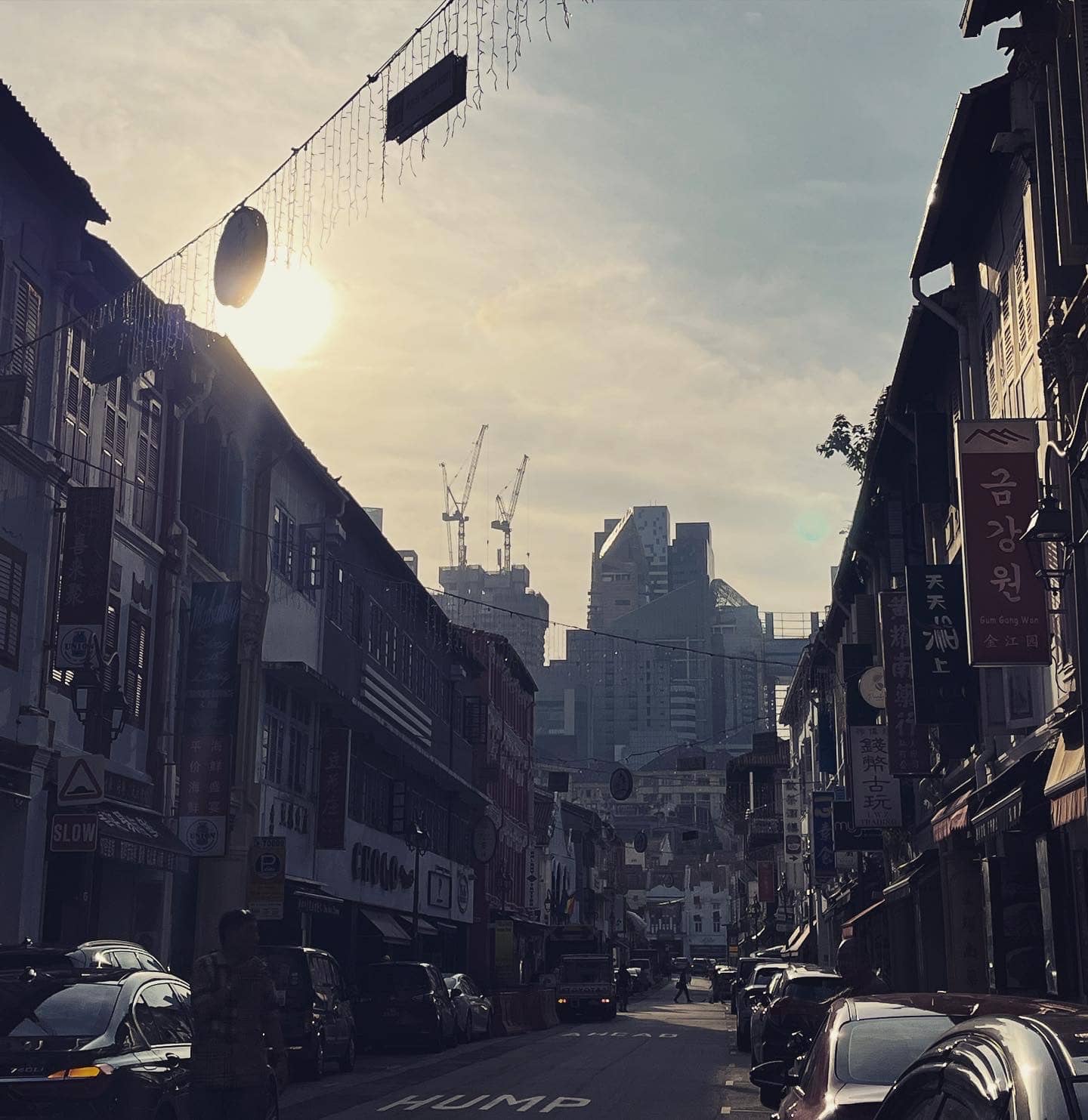
The MAMAMOO Asia tour was my reason for visiting Singapore for the first time 🇸🇬. My passport's last entry stamp was January 2020, so I ended up planning a full five nights, four days. To save on airfare I chose an oddly normal midday departure and return — which, minus a half-day for the concert, left about three and a half actual days of sightseeing.
Basics
-
Passport & Visa: Taiwan passport holders can enter Singapore visa-free for up to 30 days. Passport must have at least six months of validity — no special application needed if yours qualifies.
-
Arrival Card: Complete the SG Arrival Card (SGAC) online within 3 days before arrival. No physical card needed — just the digital submission. The form asks you to confirm recent health status and upload your vaccine QR code (two doses required at the time). You'll receive a confirmation email; no need to print but downloading it as a backup is wise.
-
Time Zone: Singapore is at roughly the same longitude as Taiwan — no jet lag.
-
Weather: Year-round temperatures similar to a Taiwanese summer, being near the equator. Shorts and t-shirts are standard; nobody will look twice. In February there are frequent afternoon downpours, usually around 4–7 PM — bring a rain jacket.
-
Currency: SGD to TWD is roughly 1:23. Prices felt comparable to Xinyi District in Taipei.
-
Card Acceptance: Except at hawker stalls, most restaurants, convenience stores, and supermarkets accept cards. MRT and buses can be tapped directly with a credit card (JCB not accepted).
-
Language: English is the main language — Chinese signage is rare. If the person is ethnically Chinese, there's about a 75% chance Mandarin works.
-
Electricity: 220–240V. Most phones and cameras are fine. Hotels almost always have universal adapters, and USB sockets are common.
-
Tax Refund: Shops with the Tax Free sign offer refunds on purchases of SGD 100 or more. Not all supermarkets qualify — even though staff told me I could get the refund at the airport, I couldn't because I hadn't received the proper paperwork.
Currency Exchange
I had most of this sorted a few days before departure. But the night before — actually the morning of — I suddenly realized the concert venue sold merchandise that only accepted cash or Singapore's version of EasyCard. So I did an online foreign currency exchange at the last minute (you could also buy at the airport, but there's a slight rate difference). Taiwan's Taichung Commercial Bank doesn't allow same-day pickup, but Mega Bank (兆豐銀行) does — you can fill out the form online, specify small denomination notes, and the transfer confirms quickly.
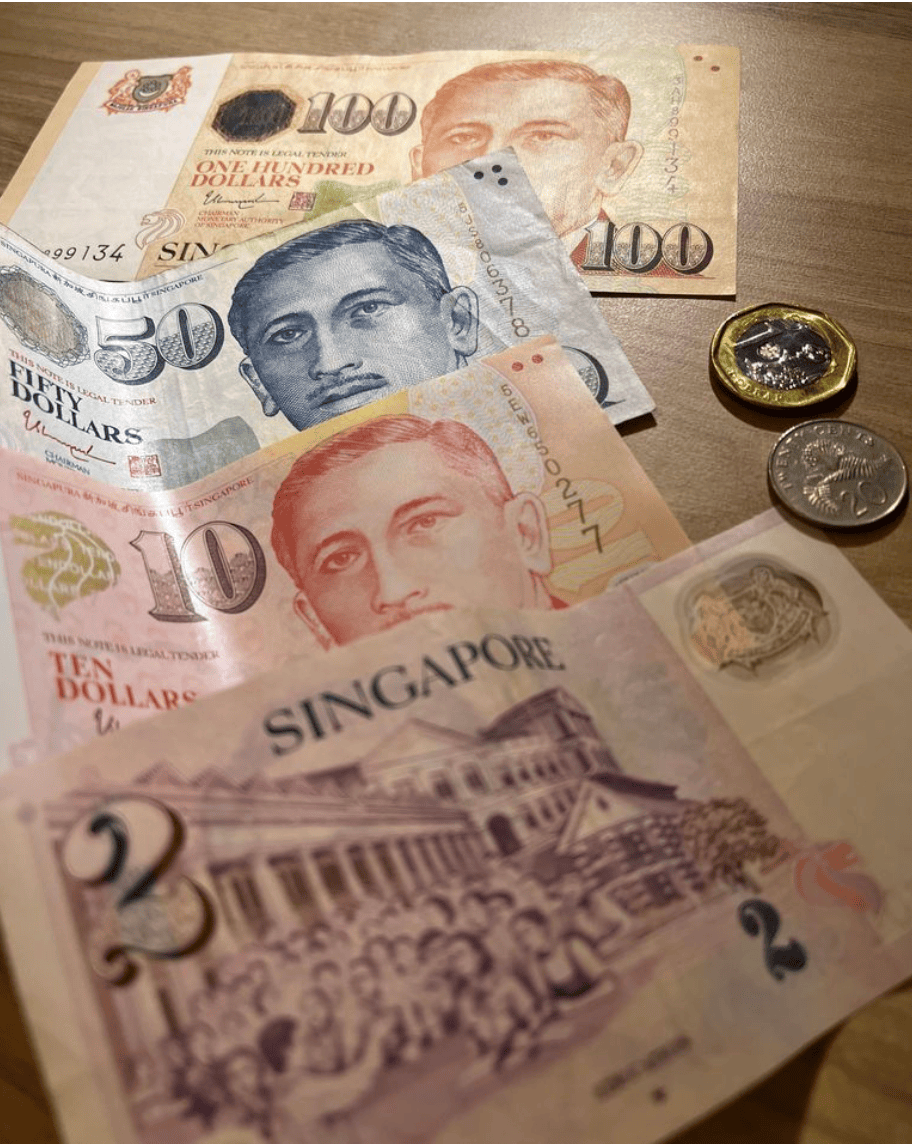
Denominations are 100/50/10/5 for notes, and 1/0.5/0.2/0.1/0.05 for coins. I used a card for everything swipeable and estimated SGD 300 total (about TWD 4,500) for 3 meals × 5 days plus souvenir budget.
In practice, prices weren't as high as expected. Regular breakfast like chicken rice or desserts was similar to Taiwan prices — only sit-down restaurants were noticeably pricier. See Singapore Food for a price reference list at the end.
February 2023 exchange rate: 1 SGD = TWD 22.88. Online exchange has no handling fee and allows denomination selection — I'd recommend asking for 50-dollar notes, as some shops prefer not to break 100s. Local exchange booths in Singapore can sometimes offer better rates; they're very common if you need emergency exchange.
Mega Bank's Terminal 1 pickup counter is on the ground floor near check-in counter 14 — not upstairs as the website suggests. I wasted a lot of time going up and down.
Credit Cards for Overseas Use
- Primary: Taishin FlyGo (Mastercard)
- 3% unlimited overseas cashback
- 1.5% foreign transaction fee (offset by the cashback)
- Airlines with 5% cashback: EVA Air, China Airlines, Starlux, Tigerair
- Full trip coverage travel insurance when flight is paid with this card
- A friend who'd just returned from Singapore said: you can use your credit card for individual transit fares instead of buying an EasyCard — you'll pay a small overseas handling fee of about TWD 1. Mastercard tends to have slightly lower fees due to the settlement method.
- Actual experience in Singapore:
- If you have a card with 3%+ cashback (contactless payment required), there's no need for a transit card. My travel companions bought EasyCards and found pickup points inconvenient plus had to reload separately.
- Apple Pay and other mobile payment works on MRT and buses.
- I used Mastercard, not Visa — instant SMS confirmation on each swipe.
- Final 5-day transit bill settled together: SGD 20.38 ≈ TWD 464.
- Backup: Taishin Gogoro (Visa) — cumulative spend rewards from TWD 5,000
- 3% unlimited overseas cashback
- 1.5% foreign transaction fee (offset by cashback)
Clearing Customs
Regulations changed over time; this reflects February 2023 rules.
At check-in in Taiwan, ground staff checked vaccine proof (the yellow card was fine). My yellow card had incomplete info so I also printed the Digital COVID Certificate — make sure the version includes full detail on each dose.
I always thought Singapore was "close" because there's no time lag, but the flight is four hours — longer than Japan. The Scoot seat was marginally wider than Peach. On the flight I organized my itinerary. From the departure gate I could see what looked like a concert crowd — and then I noticed the guy two seats ahead had dropped a photocard. From the group: it was the rare male member!
Though the flight was scheduled to land at 16:40, it arrived 20 minutes early. Singapore being multiracial was something I knew intellectually — 77% Chinese, 15% Malay, 8% Indian, others — but stepping off the plane, I was genuinely surprised to find almost no Chinese signage anywhere. It's thoroughly English.
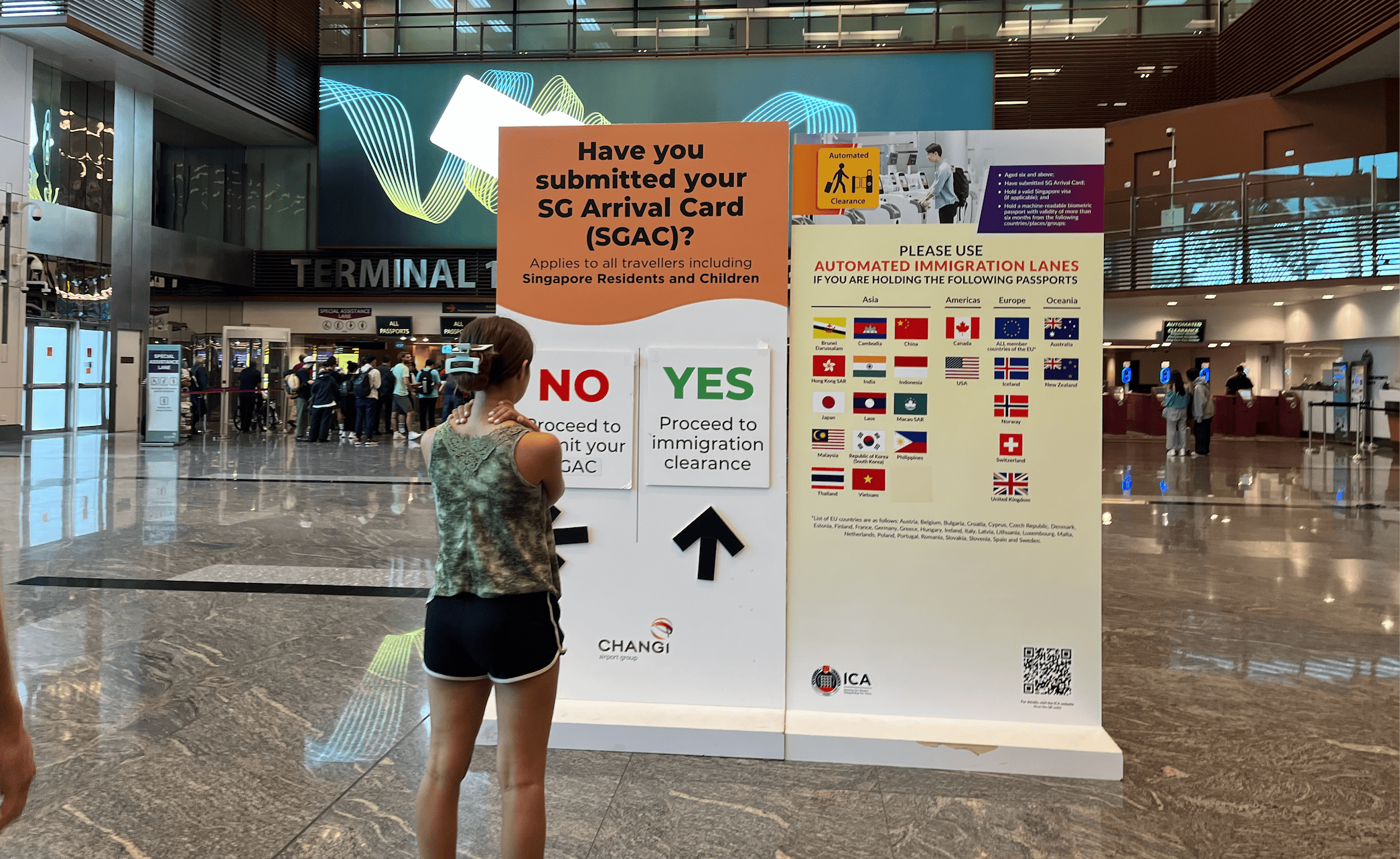
No checked luggage so I went straight to immigration. Having filled out the SGAC in advance meant going directly to the officer. My agent didn't ask for any documents — presumably it's all in the system. The process: data confirmation, photo, fingerprints. The only slow part is the queue. Total time, under 15 minutes.
Getting a SIM Card
After clearing customs, with no baggage to collect, I headed straight out to pick up my SIM card.
I used a Starhub SIM card — 100GB for five days. Never came close to hitting the limit. The card came with a local number, which should allow SMS-based registration for the shared bicycle service Anywheel, but I forgot to write down the number when I went out.
The pickup point was listed as "the JP Morgan Chase foreign exchange counter at Terminal 1," which was unhelpfully vague. Here are the actual details:
- If being without internet would send you into a panic: Changi Airport WiFi is rock solid — you'll be connected the moment you land.
- After exiting immigration, turn right — you'll see the UOB Bank exchange counter.
- On the right-side glass, there's an A4 sheet that says "Sim card here."
- Show your KKday booking and passport to the counter staff.
- They'll hand you off to someone for activation. Before that step: remove your phone case and take out your existing SIM. The counter doesn't have an iPhone SIM tool — bring your own.
- Signal was excellent throughout. Five days of heavy Google Maps, LINE, and occasional personal hotspot sharing — no issues at all.
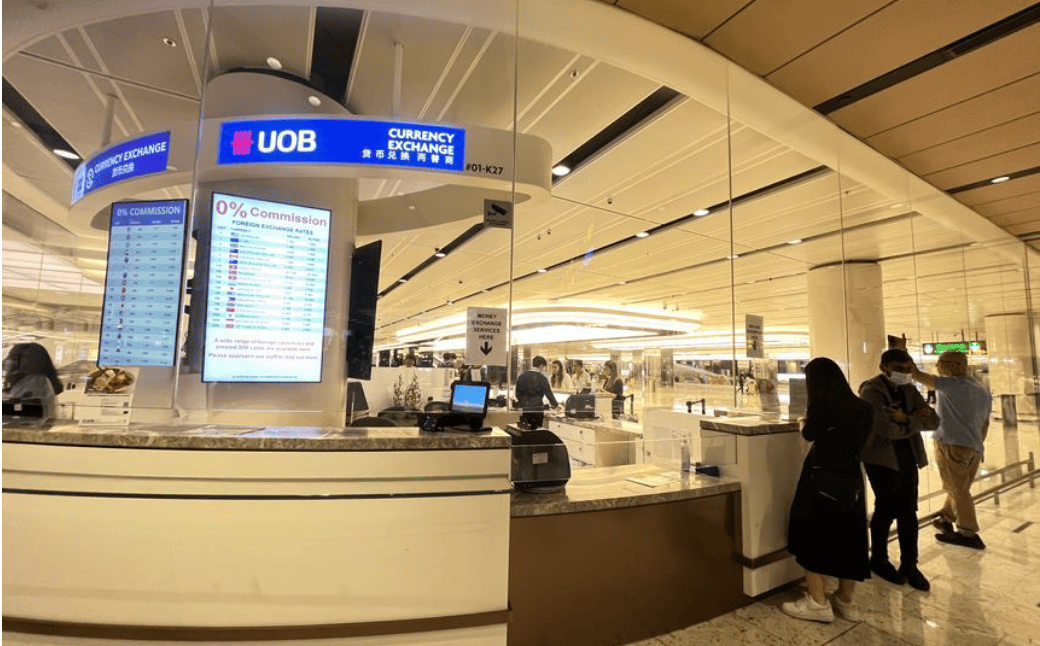
The pickup process was quick — except the phone case removal took ages. My new RhinoShield hadn't come off since I installed it, and it took enormous effort from a very patient staff member to pry it loose. His hands looked like they were about to give out. Strongly recommend removing your phone case on the plane.
Taking the MRT
After confirming internet was working, I followed signs to the city-bound train. Two legs:
- Inter-terminal shuttle (T1–T3) — Free
- MRT — fare required
Terminal 1 has "Train to City" signs directing passengers to the shuttle entrance. The shuttle runs to Terminal 3, then follow signs to the MRT entrance (green line). Coming down the escalator you'll see queues — likely people loading their EasyCards. Since I hadn't bought one and was used to tap-to-pay at home, I instinctively looked for a ticket machine — there wasn't one. Only top-up machines exist.
At the service counter I confirmed what my colleague had told me: you can genuinely tap your credit card directly at the turnstile. MRT and buses both accept it. Apple Pay works too — but JCB and Amex are not accepted. Five days of transit including airport transfers: SGD 22.94 + fees = TWD 530, minus cashback TWD 15 = TWD 515 total.
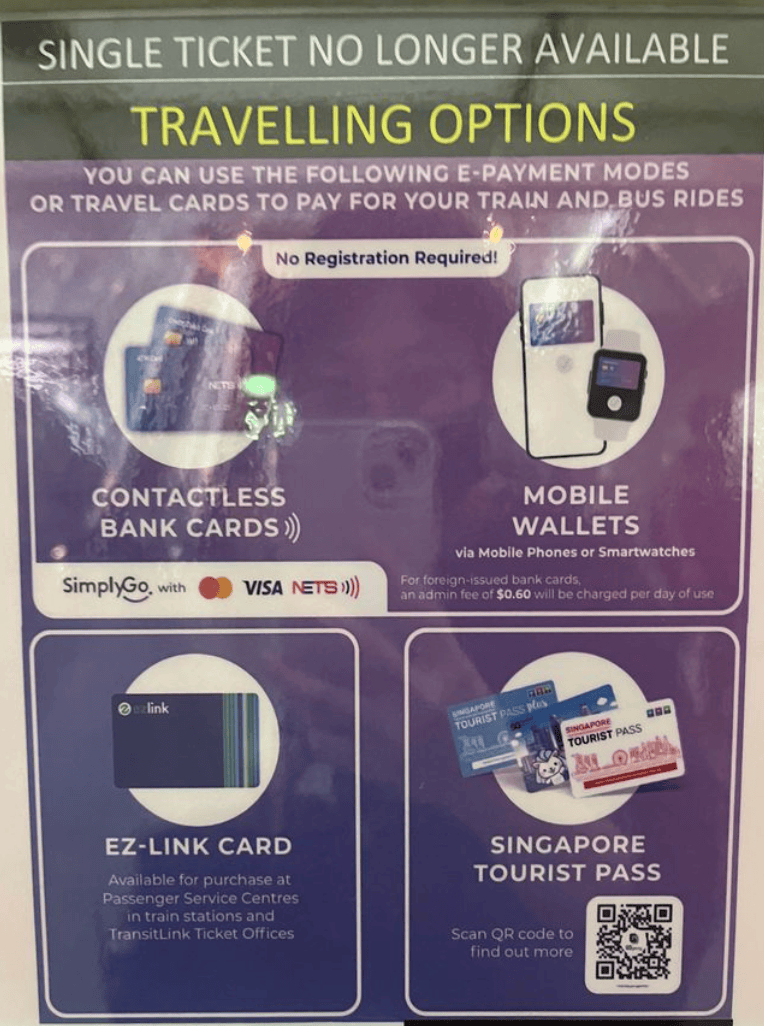
Escalator etiquette in Singapore is less regimented than Taiwan — people stand and walk on both sides. Watch out for collisions.
Singapore's MRT is similar to Taipei's in English name and layout. The main adjustment: all station names are in English only. If English station names make your eyes glaze over, memorize the color and station number for transfers.
Terminal 3 is CG2 (Green — Singapore Changi Airport). My accommodation was near Chinatown; travel time was about an hour. Transit lines I used:
- For the Blue line: ride one stop to (CG1/DT35) and transfer.
- For the Green line: ride two stops to (CG/EW4) and transfer (similar to the Xinbeitou–Beitou loop transfer).
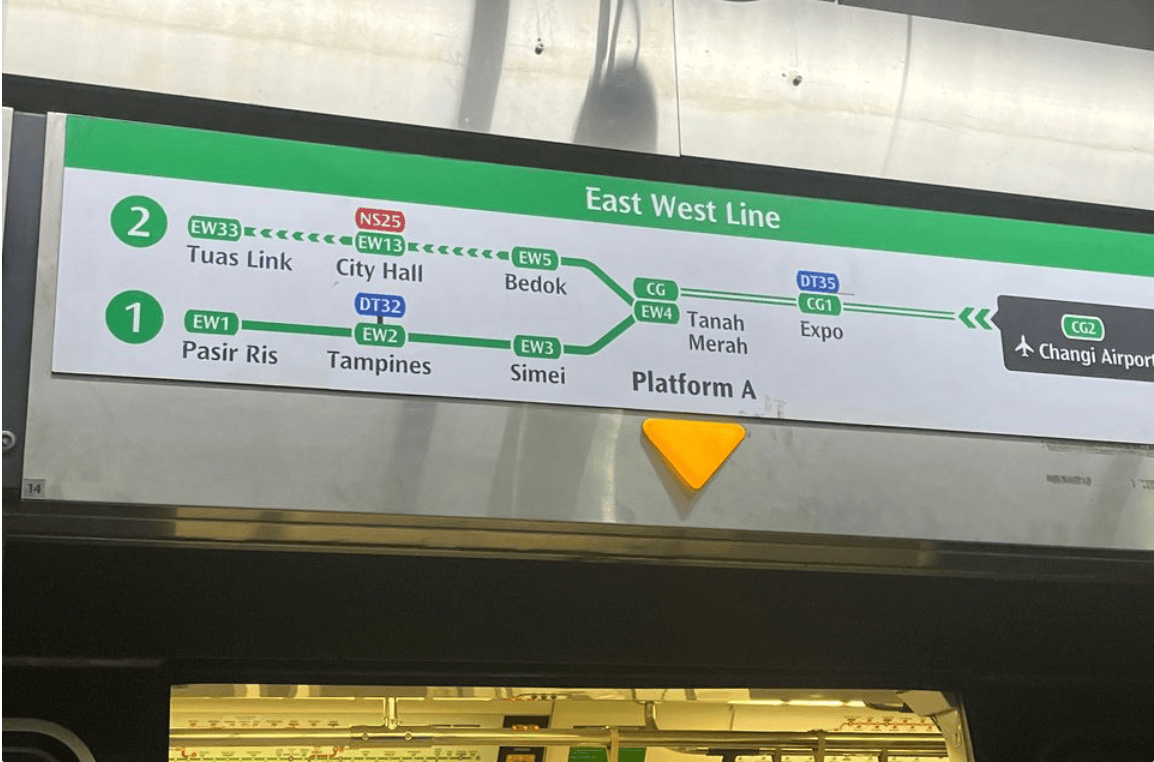
Using photo timestamps to reconstruct Day 1 — I moved very efficiently (probably because I wasn't consulting anyone else):
- 0815 Leave home
- Airport Express: Beimen to Terminal 1
- Foreign currency pickup: Mega Bank, T1 ground floor near counter 14
- 0945 Scoot check-in
- Breakfast at 3F Starbucks
- 10:50 Through security, waiting at gate
- 12:10 Departure (departed early)
- 16:30 Arrival in Singapore (pilot proudly announced 20 minutes ahead of schedule)
- 16:40 Immigration
- 16:50 Exit immigration
- 17:00 SIM card done
- 17:00 Shuttle
- 17:15 T3
- 17:20 MRT
- 18:30 Hotel
- 18:50 Head out to explore